Furnace safety
How a Furnace Leaks Carbon Monoxide and the Signs to Watch For
A cracked heat exchanger or a blocked flue is how a gas furnace leaks carbon monoxide. Here are the signs, what to do first, and how we check a furnace for it.
Alarm sounding or a rotten-egg smell? Get outside and call 911 first. For the furnace check after, we answer or call back the same working day.
The short answer
How Carbon Monoxide Escapes a Furnace
A damaged heat exchanger or a blocked flue lets a gas furnace leak carbon monoxide into your home.
The burners fire inside a sealed metal box, the "heat exchanger", and the flue carries their exhaust up and out of the house. Crack the box or block the flue and that exhaust, carbon monoxide in it, ends up in the air you breathe. The CDC names gas furnaces among the household sources of it.
That makes both of them a safety problem, not just a comfort problem.
Heat exchanger
A crack lets exhaust mix into the warm air the furnace sends through the rooms.
Flue
A blockage traps exhaust, and it builds up inside the home instead of venting out.
What to watch for
Warning Signs: Yellow Flame, Soot and a Sounding Alarm
A yellow burner flame instead of a blue one points to poor combustion and a possible carbon monoxide risk, and a sounding alarm or a rotten-egg smell means acting at once.
Watch for any of these five around the furnace or in the house.
-
Leave the house first
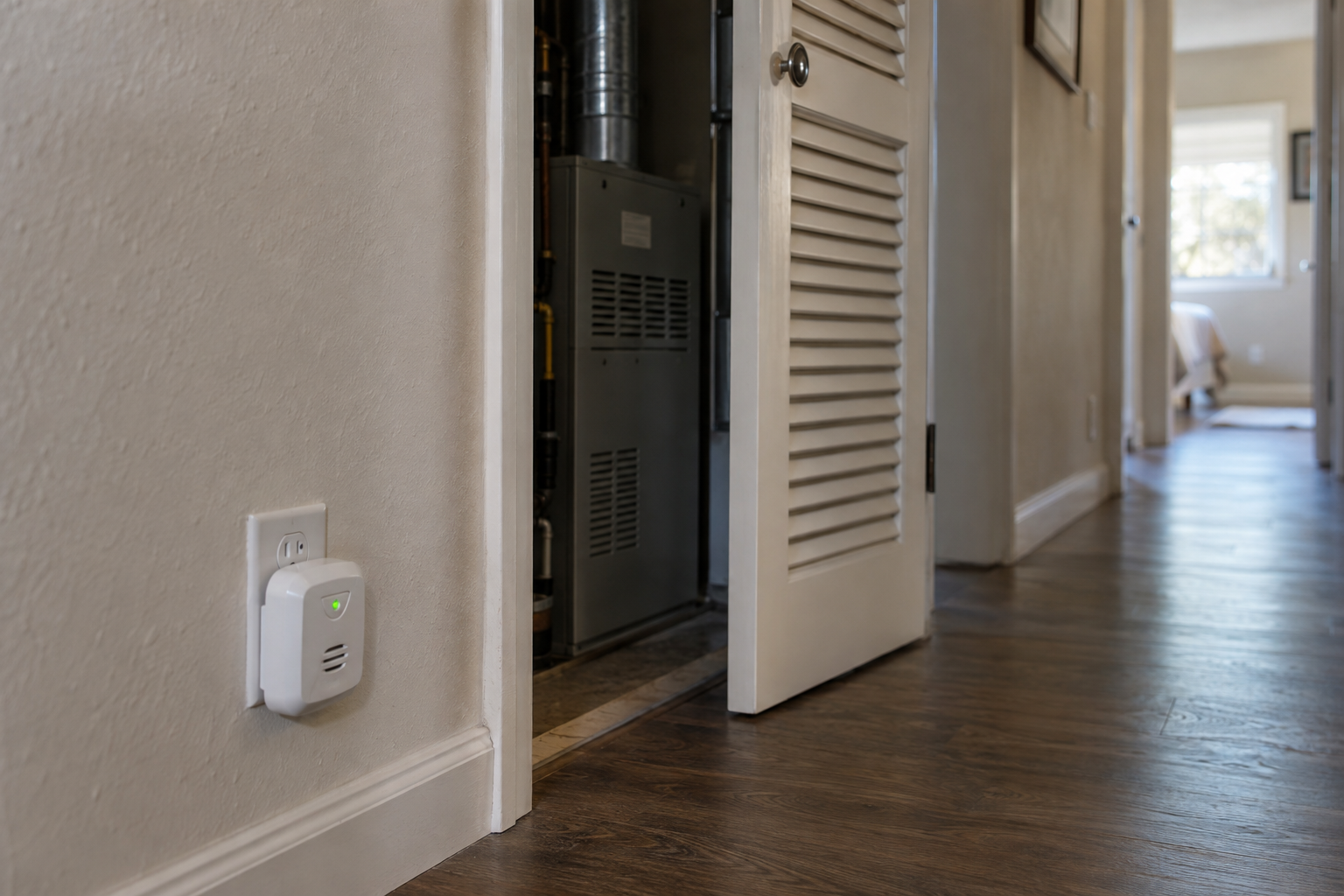
Carbon monoxide alarm
An alarm going off is a reason to get out, not to press test and wait. The U.S. Consumer Product Safety Commission covers the hazard and the alarms.
-
Leave the house first
Rotten-egg gas smell
Sulfur in the air can signal a leak, and that is an emergency that cannot wait.
-
Yellow burner flame
A healthy burner flame is blue. A yellow one means the gas is not burning cleanly.
-
Soot around the furnace
Dark streaks or soot near the burners or the flue pipe point to exhaust going where it should not.
-
Headache or nausea at home
Headaches or nausea that ease once you are out of the house. The CDC lists the common symptoms.
If you suspect it
Get Outside and Call 911
Anyone who suspects carbon monoxide poisoning should get outside to fresh air and call 911.
Do not stop to open windows or hunt for the source. The furnace question comes after everyone is out and safe, and that is where we come in.
Do these in this order.
Get everyone outside
People and pets, out into fresh air, straight away.
Call 911 from outside
Say you suspect carbon monoxide, and stay out of the house.
Wait for the all-clear
Go back in only when the responders tell you it is safe.
Keep the furnace off
Do not restart it. Call us, and the safety check is the first thing on the visit.
100+
deaths from do-it-yourself furnace work
Why Furnace Work Is Not a DIY Job
More than 100 people have died from carbon monoxide while working on their own furnaces.
The parts that decide whether exhaust stays sealed, the heat exchanger, the burners and the flue, are the parts that get opened in a repair, and a furnace put back together wrong can vent into the house instead of out of it. Changing the filter and keeping the closet clear is yours. Anything behind the burner panel is ours.
On a furnace visit
Safety Checks During Furnace Repair
A furnace repair visit begins with a safety check that includes carbon monoxide screening, and a tune-up inspects the firebox for cracks and checks the flue venting.
Here is what that check covers, in order.
Carbon monoxide screening
The safety check comes first, before anything else on the furnace is touched.
Firebox and heat exchanger
The sealed box around the burners, where any opening lets exhaust reach the rooms.
Flue venting
Checked so the exhaust has a clear path up and out of the house.
Seals and connections
The combustion chamber seals and the electrical connections are checked too.
We quote the whole job before we start, with no surprise charges after.
Cracked Heat Exchangers and Furnace Replacement
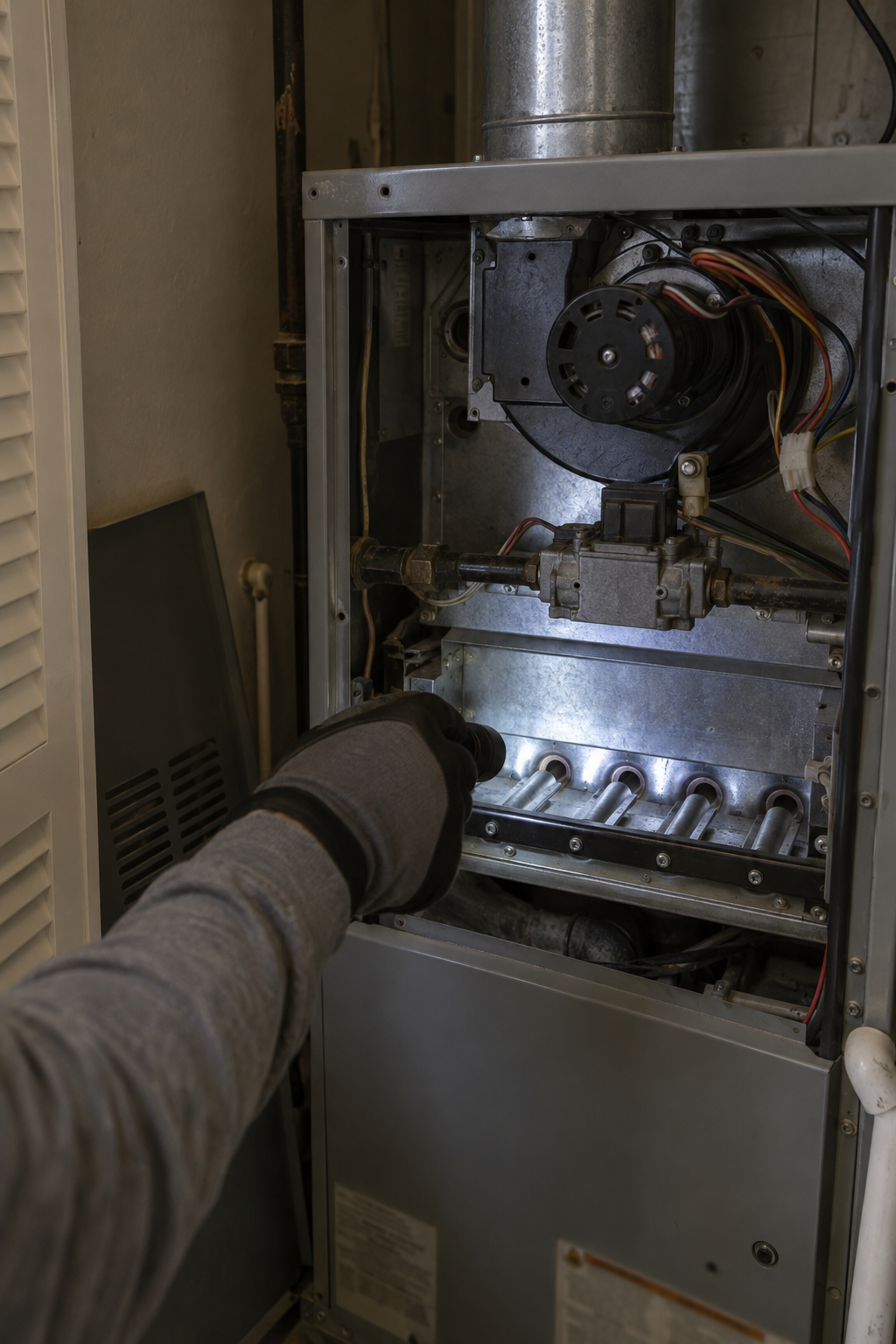
A cracked heat exchanger usually points to replacing the furnace, because the leak it can open is a safety problem.
A crack is not something a patch makes safe again. When we find one, we show it to you and price the replacement, so you decide with the number in front of you.
Furnace Replacement in BellGoogle reviews
Neighbors on how we work
Our Google reviews, word for word as the customers wrote them.
Great service at a great price. Very nice and respectful too.
They did a great job. Javier and his team are very professional and courteous and respectful. I definitely recommend them. They saved us thousands
They did fantastic job at a great price. Javier And his team were really professional and super nice. Appreciate the great work they did!👊🏾😎
Saw a sign? Book the furnace check.
Once everyone is safe, call and tell us what you noticed. The visit starts with the carbon monoxide screening, and you hear the price of any repair before we begin.
We answer the phone or call back the same working day.