
New air conditioning
New AC Installation in Bell, Sized to the Home
New central and ductless air conditioning for Bell homes and businesses, sized from a load calculation of the house and quoted as a whole job before we start.
Free, no-obligation estimates. We work Monday to Saturday and call back the same working day.
What the job covers
Central and Ductless AC Installation in Bell
We size, install and test new central and ductless air conditioners for Bell homes and businesses.
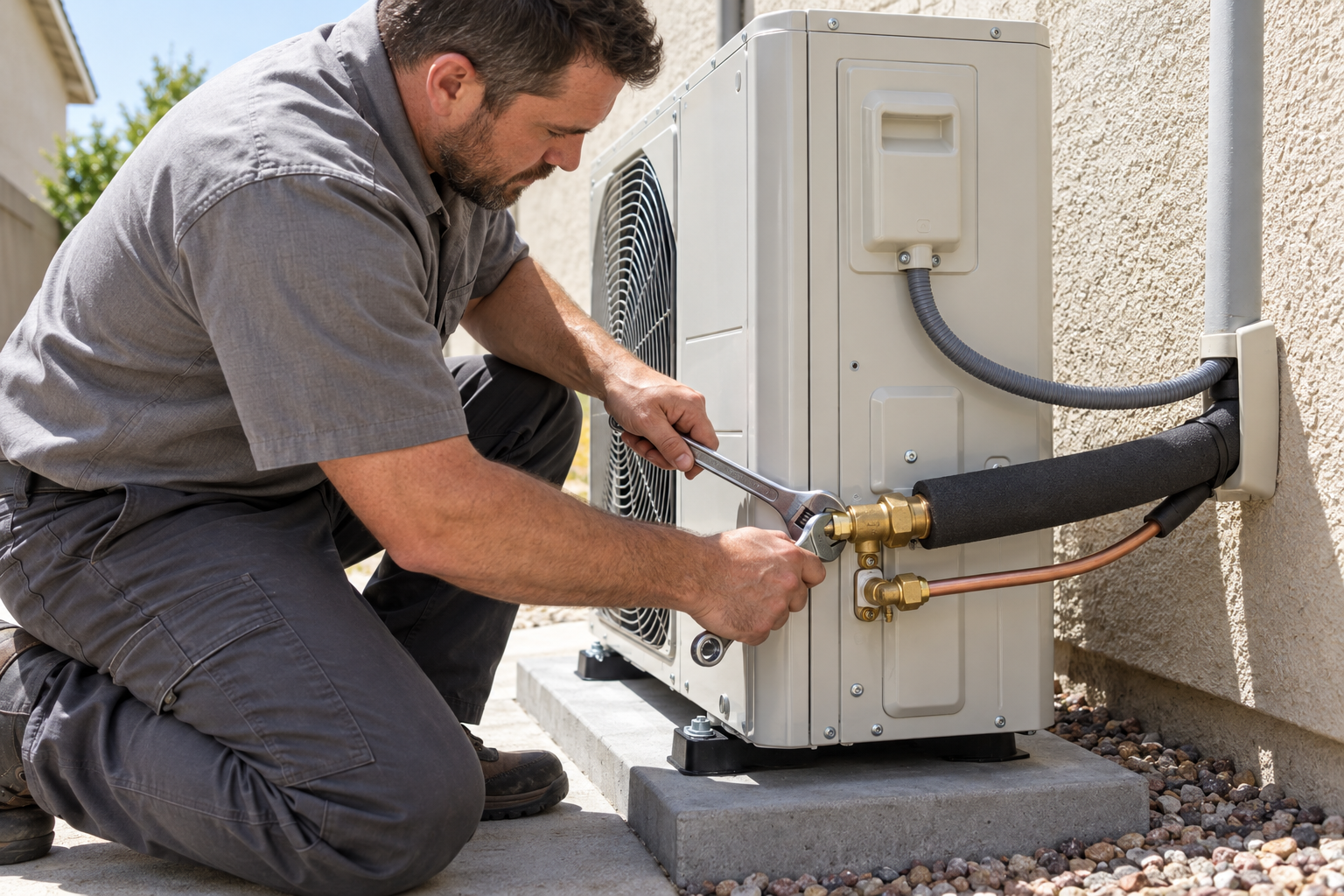
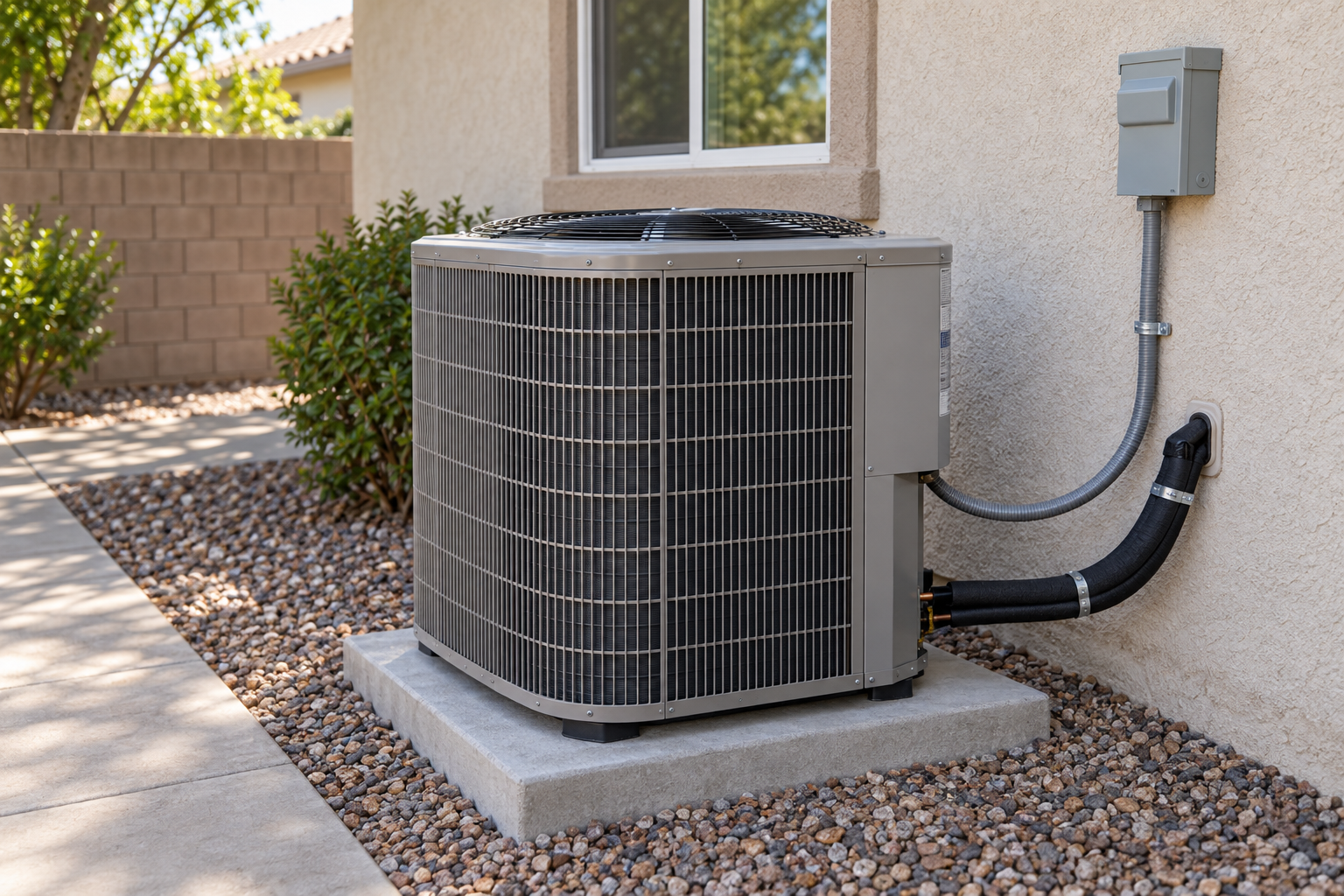
A central system is a "split system": the evaporator coil sits inside the home and the "condenser" sits outside on a pad, joined by copper refrigerant lines. A ductless mini-split hangs one or more heads on the walls and needs no ductwork. Either way, the job runs from sizing and the electrical to setting the equipment, charging it and testing the airflow.
- Systems
- Split, ductless, package and heat pump
- Properties
- Homes and businesses
- Estimate
- Free, no obligation
- Hours
- Monday to Saturday
Sizing
Manual J Load Calculation and Sizing
A properly sized system comes from a "Manual J load calculation" of the home, not from its square footage.
The calculation works out how much heat the house actually takes on: its walls and insulation, its windows and which way they face, how tight it is and who lives in it. ACCA Manual J is the engineering standard for residential equipment sizing, and good installers size from it rather than from a rule of thumb.
Size matters both ways. A unit that is too big cools the air fast and shuts off, then starts again a few minutes later, which is called "short-cycling" and strains the motor and compressor. A unit that is too small runs and runs on a hot afternoon without catching up.
What decides the size
The load calculation
The heat this house gains, worked out from how it is built and where it sits. This is the number the equipment is matched to.
The duct check
The ducts are evaluated with the load, so the new system's airflow can meet the manufacturer's specifications.
Not square footage alone
Houses with the same floor area can need different equipment, and a rule of thumb is where oversized systems come from.
System types
Split Systems, Ductless Mini-Splits and Package Units
A new AC is a split system, a ductless mini-split or a package unit, and the home's ducts and layout decide which one fits.
Here are the system types we install, and where each one fits.
-
For homes with ducts
Split system
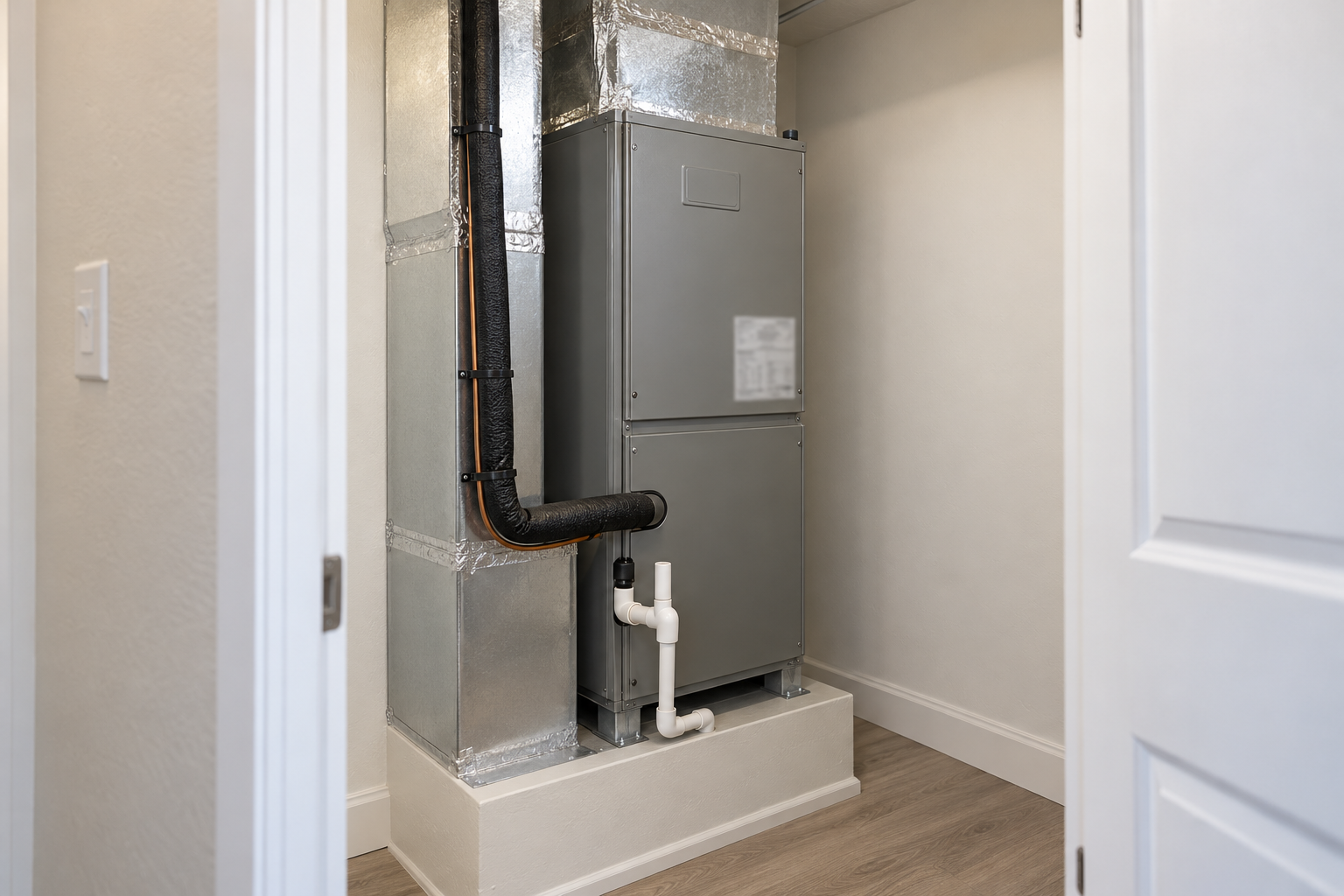
The evaporator coil goes inside with the air handler and the condenser outside on a pad, and cool air reaches the rooms through the ducts the house already has.
-
Ductless mini-split
One or more indoor heads on the walls, an outdoor condenser, and refrigerant lines through a small hole in the wall. It fits a home with no ductwork.
Mini Split Installation in Bell -
Package unit
Heating and cooling in one outdoor cabinet, usually on a roof or a concrete pad, which is why shops and offices with flat roofs so often run one.
-
Heat pump
It sits outside like a condenser and cools like one, but a "reversing valve" switches it to heating in winter, so one system does both jobs.
How an installation goes
Installation Steps: Ducts, Electrical Circuit, Refrigerant Lines and Testing
An installation runs from the load calculation and a duct check, through the dedicated circuit, setting the equipment and evacuating the lines, to a final charge and airflow test.
Each step below follows ENERGY STAR guidance for a quality installation. We quote the whole job before the first step, with no surprise charges after.
Here is the installation, step by step, in the order it happens.
Load calculation
We work out the cooling the house needs from a Manual J load calculation, and that figure picks the size of the equipment.
Duct evaluation
The existing ducts are checked for leaks, size and condition, since they decide how much of the new system's air reaches the rooms.
Dedicated circuit and disconnect
The condenser gets its own circuit sized to its maximum current draw, wire of the right gauge, and a disconnect within sight of the unit.
Condenser and coil
The condenser is set level on its pad outside, and the matching evaporator coil goes in at the air handler inside.
Line set and vacuum
The copper refrigerant lines are run and connected, then pulled into a deep vacuum to clear air and moisture before refrigerant goes in.
Charge and airflow test
With the system running, the "superheat and subcooling" readings confirm the charge against the manufacturer's targets, and the airflow is checked against its specifications.
Permit inspection where required
Whether a permit and plan review are needed depends on the work and the jurisdiction. Where one is required, the inspection is part of the job.
What it costs
AC Installation Prices and What Sets Them
A new AC installation is priced within a typical range, and the system type, the efficiency rating, the size of the home and any duct work decide where a job falls in it.
Those ranges come from published figures, not from our own quotes.
What moves a job up or down that range is listed below.
- System type. A split system, a ductless mini-split, a package unit and a heat pump are priced differently.
- Efficiency rating. A higher "SEER" rating costs more up front and uses less electricity after.
- Size of the home. A bigger cooling load calls for bigger equipment.
- Duct work. Ducts that must be modified change the scope of the job.
Typical range, Los Angeles area
$4,790 to $10,100
An AC replacement
$10,000 to $20,000
A 3 to 4 ton central air replacement
Your exact price comes from a free, no-obligation estimate, and we quote the whole job before we start.
We answer the phone or call back the same working day.
Who we install for
Residential and Commercial AC Installation
We install air conditioning in houses, apartments, shops and offices, rooftop package units included.
A house or an apartment usually takes a split system or a ductless mini-split, depending on its ducts. A shop or office more often runs a "package unit", one outdoor cabinet on the roof or a concrete pad, and we set and connect those as well.
Houses
Apartments
Shops
Offices
What we promise on every install
These hold from the estimate to the clean-up, on a house or a rooftop.
- Free, no-obligation estimates
- We answer the phone or call back the same working day
- We show up when we say we will
- We quote the whole job before we start, with no surprise charges after
- We clean up when the work is done
We work Monday to Saturday. Calls outside our working hours go to voicemail and we return them the next working morning.
Google reviews
What Our Customers Say
Every review below is from Google, as the customer wrote it.
Great service at a great price. Very nice and respectful too.
They did a great job. Javier and his team are very professional and courteous and respectful. I definitely recommend them. They saved us thousands
They did fantastic job at a great price. Javier And his team were really professional and super nice. Appreciate the great work they did!👊🏾😎
Before you choose
Efficiency Ratings, Refrigerant and Permits
A new system's "SEER" efficiency rating, the A2L refrigerant it runs on and whether the job needs a permit all shape the installation.
None of them change how carefully the system is sized, but each one changes the equipment, the price or the paperwork. The short answers are below.
-
SEER Efficiency Ratings
SEER is the efficiency rating that compares the cooling a system delivers with the energy it uses over a whole season. A higher rating uses less electricity for the same cooling, and it is weighed against the price when the new equipment is chosen.
-
A2L Refrigerant in New AC Equipment
New AC equipment uses an "A2L refrigerant", usually R-454B or R-32, which has a much lower global warming potential. A2L refrigerants are mildly flammable, and handling any refrigerant falls under the U.S. EPA refrigerant rules.
refrigerant phase out -
AC Installation in Bell and Nearby Towns
We install air conditioners in Bell, CA and the nearby towns listed on our service area page. A job farther out is a question for the call.
Towns We Serve Around Bell
FAQ
AC Installation Questions
How much should an AC install cost?
In the Los Angeles area an AC replacement typically runs $4,790 to $10,100, and a 3 to 4 ton central air replacement often runs $10,000 to $20,000. The system type, the efficiency rating, the size of the home and any duct work set where a job falls in those ranges, as our guide to HVAC costs lays out.
How much does it cost to install AC in my house?
Your price depends on your house: how much cooling the load calculation says it needs, whether it has ducts the new system can use, and which system type fits. Our guide to what HVAC repair costs explains why the price varies from house to house. Call for a free, no-obligation estimate and you hear the price for the whole job before any work begins.
Can you install an AC yourself?
An installation takes a dedicated electrical circuit sized to the condenser's current draw, a disconnect within sight of the unit, refrigerant lines pulled into a vacuum and charged, and an airflow check against the manufacturer's specifications. New equipment runs on a mildly flammable A2L refrigerant, and whether the job needs a permit depends on the work and the jurisdiction. That is work for an HVAC technician.
Adding air conditioning? Start with a free estimate.
Call and tell us about the house and the rooms you want cooled. We check the ducts and the electrical, size the system to the home and quote the whole job before any work starts.
Free, no-obligation estimates, and we show up when we say we will.